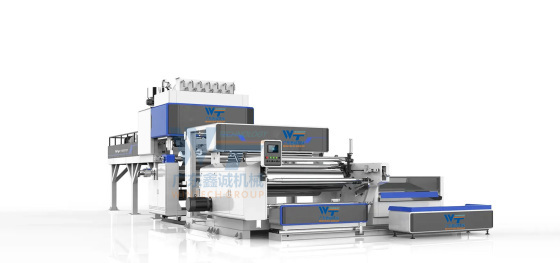
Somewhere between a plastics factory and a shipping dock sits a piece of equipment most people never think about, even though its output touches almost every industry that ships physical goods. A stretch film making machine takes raw plastic resin and turns it into the thin, elastic wrap used to secure pallets, protect furniture, seal food trays, and bundle construction materials. This article looks at what these machines actually do, who buys them, and where their output ends up in the real world.
What This Equipment Actually Produces
The output is a roll of thin polyethylene film with a specific and unusual property: it stretches significantly beyond its original length and then clings tightly to whatever it is wrapped around, without needing heat, glue, or tape. That combination of elasticity and cling is what makes the film useful in the first place. A pallet wrapped tightly in several layers of this film becomes a single stable unit that can survive a forklift ride, a truck journey, and a warehouse shelf without shifting or falling apart.
Getting that balance of stretch and strength right is not simple. Too little stretch and the film cannot hold a load tightly. Too much and it tears before it ever gets wrapped around anything. The machine exists to hit that target consistently, roll after roll, batch after batch.
Who Actually Buys This Equipment
Three broad groups of buyers show up again and again in this market. Plastic packaging manufacturers buy production lines to produce film they then sell in bulk to distributors, retailers, and logistics companies. Large scale warehouses and distribution centers that go through enormous volumes of film sometimes invest in their own line rather than continuously buying from an outside supplier, especially once their consumption reaches a certain scale. And contract manufacturers, who produce custom film specifications for specific clients such as food companies needing food safe film or construction firms needing heavier gauge wrap, round out the buyer base.
Each of these buyers approaches the purchase with a different priority. A packaging manufacturer usually cares most about output volume and cost per kilogram. A warehouse operator buying for internal use cares more about matching output to their own consumption without over investing in unused capacity. A contract manufacturer often prioritizes flexibility, since they may need to switch between different film specifications for different clients on the same equipment.
Everyday Applications Downstream of the Machine
Pallet and Load Stabilization
This is the single largest use case worldwide. Warehouses wrap stacked pallets of boxes, bags, or crates in several rotations of film to hold the entire load together as one unit. Without it, a stack of boxes could easily shift, lean, or collapse during transport, leading to damaged goods and safety hazards on a truck or in a warehouse aisle.
Food Packaging and Preservation
A lighter, food safe version of the same basic film is used to seal fresh produce trays, wrap meat and poultry packages, and cover prepared food containers. This grade of film needs to meet food contact safety standards, which affects the resin blend and additives used during production, but the underlying stretch film making machine principle stays the same.
Furniture and Moving Protection
Moving companies and furniture retailers use a slightly different variant designed to protect surfaces from scratches and dust rather than to compress a load tightly. It is often less tacky than pallet wrap so it can be removed cleanly without leaving residue on polished or delicate surfaces.
Construction and Bulk Material Bundling
On construction sites, a heavier gauge film bundles pipes, lumber, insulation rolls, and other bulk materials for transport and outdoor storage. This version needs greater puncture resistance and often some UV stabilization if materials will sit outdoors for extended periods before use.
How Output Quality Shapes Where Film Can Be Sold
Not every roll of film produced is equally suited to every application, and this is where machine quality really shows up in the market. Film with inconsistent thickness, sometimes called poor gauge control, might still work fine for internal warehouse use where appearance and minor thickness variation do not matter much. But that same film would likely fail quality checks for a food packaging client, who typically demands tighter tolerances and consistent clarity. Manufacturers who invest in higher precision equipment, better temperature control, and more sophisticated die heads open themselves up to higher value markets like food grade and premium retail film, rather than being limited to bulk, lower margin industrial use.
Capacity Planning: Matching the Machine to the Market
A common mistake among newer manufacturers is buying based on the biggest capacity they can afford rather than the capacity their actual customer base can absorb. A line capable of producing several hundred kilograms an hour sitting mostly idle because there are not enough buyers lined up is a slow way to lose money on an expensive asset. It usually makes more sense to size equipment around realistic near term demand with room to scale, rather than maximum theoretical output on day one.
Regional and Industry Specific Demand Patterns
Demand for this equipment tends to track closely with growth in e-commerce, food distribution, and general manufacturing activity in a given region. Areas experiencing rapid warehouse and logistics expansion typically see rising demand for both film itself and the machines that produce it, since local producers want to avoid the cost and delay of importing finished rolls from overseas. Buyers evaluating a purchase often look closely at regional demand trends before committing, since local market conditions affect how quickly a new production line can reach profitable utilization.
How This Equipment Differs From a Wrapping Machine
A surprising number of first time buyers confuse a production line with the wrapping equipment used further down the supply chain, so it is worth clearing up the distinction. A wrapping machine, whether a turntable style unit or a rotating arm design, takes an already finished roll of film and wraps it around a pallet or load at a warehouse or distribution center. It does not produce film. A stretch film making machine, by contrast, sits earlier in the chain and manufactures the roll itself from raw resin. A packaging company might own both types of equipment for different purposes, or a warehouse might only ever own a wrapper and buy its film from an outside producer. Understanding which category a piece of equipment falls into avoids a lot of confusion when researching or requesting quotes, since suppliers and search results for these two categories rarely overlap cleanly.
Environmental and Material Considerations
Sustainability has become a bigger factor in this industry over the past several years, and it shapes how modern equipment is specified and marketed. Many manufacturers now produce down gauged film, meaning thinner film engineered to hold the same load stability with less raw material per roll. Achieving that without sacrificing strength requires more precise extrusion control than older, thicker film ever needed. Recycled content is another growing consideration, with an increasing share of buyers asking for film blended with post consumer or post industrial recycled resin. Working recycled material into a production run typically demands finer tuning of the extrusion process, since recycled resin does not always behave as predictably as virgin material. Equipment with better temperature and pressure control tends to handle these blends more reliably, which is one more reason buyers increasingly prioritize precision over raw output speed when comparing options.
Emerging Trends Shaping This Industry
A few shifts are worth watching for anyone following this space closely. Automation continues to advance, with newer control systems offering predictive maintenance alerts that flag a developing issue before it causes a breakdown, rather than simply reporting a fault after the fact. Energy efficiency has become a bigger selling point too, as rising electricity costs push manufacturers to favor equipment with better insulated barrels and more efficient motor systems. There is also a slow but steady move toward smaller, more flexible production lines aimed at regional or niche manufacturers who want to serve local markets without importing every roll from overseas. None of these trends replace the fundamental engineering covered earlier in this article, but they do influence which features are worth prioritizing when comparing machines built in different years or by different manufacturers.
Export Markets and International Demand
A meaningful share of production capacity worldwide ends up serving export markets rather than domestic ones alone. Manufacturers based in regions with strong plastics processing industries often build lines specifically sized for export volumes, shipping finished rolls to countries where local production has not kept pace with demand from warehousing, retail, and food distribution sectors. Buyers of the machinery itself sometimes plan around this from the start, sizing a new line not just for their home market but with an eye toward eventually supplying neighboring countries once local demand is met. This kind of planning affects decisions around film width, packaging standards, and even labeling requirements built into the production process from day one, since retooling a line later to meet a new export market’s standards is far more expensive than planning for it during the initial equipment specification stage. Manufacturers who think through export potential early, even if they start out selling only domestically, tend to have an easier time scaling into new territories later without a costly equipment overhaul.
How Manufacturers Test Film Quality Before It Ships
Reputable producers do not simply trust that a line is running well and send every roll straight out the door. Most keep a quality control station near the end of the production line where samples are pulled at regular intervals and checked against a handful of standard measures. Thickness is checked at multiple points across the width of the roll to catch any gauge variation early. Tensile strength and elongation are tested to confirm the film stretches and holds within the expected range for its intended use. Clarity and cling are checked visually and by touch, since a customer wrapping visible retail goods cares about appearance in a way a warehouse client moving anonymous pallets usually does not. Rolls that fail these checks typically get diverted to a lower grade use or reprocessed as scrap resin rather than shipped to a customer expecting a specific performance standard. This ongoing testing routine is part of why established producers with a longer track record tend to command more trust and, often, a higher price than newer or less established sellers.
Final Thoughts
A stretch film making machine sits quietly at the start of a supply chain that most people never think about, yet almost everyone interacts with its output regularly, whether they notice it or not. Understanding where that film actually ends up, from pallets to produce trays to moving boxes, helps explain why buyers care so much about consistency, layer structure, and gauge control. The equipment itself is really just the starting point. What matters more is matching its output to a real, specific market rather than producing film in the abstract. Whether the end goal is supplying a local warehouse, breaking into food grade packaging, or exporting rolls internationally, the equipment choice should follow the market opportunity rather than the other way around. Buyers who start with a clear picture of their customer base almost always end up happier with the machine they eventually choose than those who buy first and figure out demand later. Taking the time to map out demand, application, and quality requirements before requesting a single quote consistently leads to a better outcome than chasing the biggest, fastest, or cheapest option on the market simply because it looks impressive on a spec sheet.